
Original Story
The Tale of the Bamboo Cutter containing elements of Japanese folklore. Written by an unknown author in the late 9th or early 10th century during the Heian period, it is considered the oldest surviving work in the "monogatari" Story form.
The story details the life of Kaguya-hime, a princess from the Moon who is discovered as a baby inside the stalk of a glowing bamboo plant. After she grows, her beauty attracts five suitors seeking her hand in marriage, whom she turns away by challenging them each with an impossible task; she later attracts the affection of the Emperor of Japan. At the tale's end, Kaguya-hime reveals her celestial origins and returns to the Moon. The story is also known as The Tale of Princess Kaguya.
My APPROACH
The portrayal of a person's life: the Earth represents the present world, while the act of forgetting all suffering and earthly experiences to return to the 'Pure Land of the Moon' symbolizes rebirth after death. The princess's crime and punishment can be understood as humanity's profound inquiry into life and death, a reflection on the nature of beauty and ugliness in the world, and an exploration of the meaning of existence. This serves to outline the conflict between two worldviews: one that engages with the world and one that seeks to transcend it.
This Allows everyone to understand that as people gradually grow up, they experience the pains of growth while being shaped by societal systems. They taste the regrets of missed opportunities, sometimes finding themselves lost in struggles for identity, and at other times making compromises. However, since we only live once, we should strive to live life to the fullest.
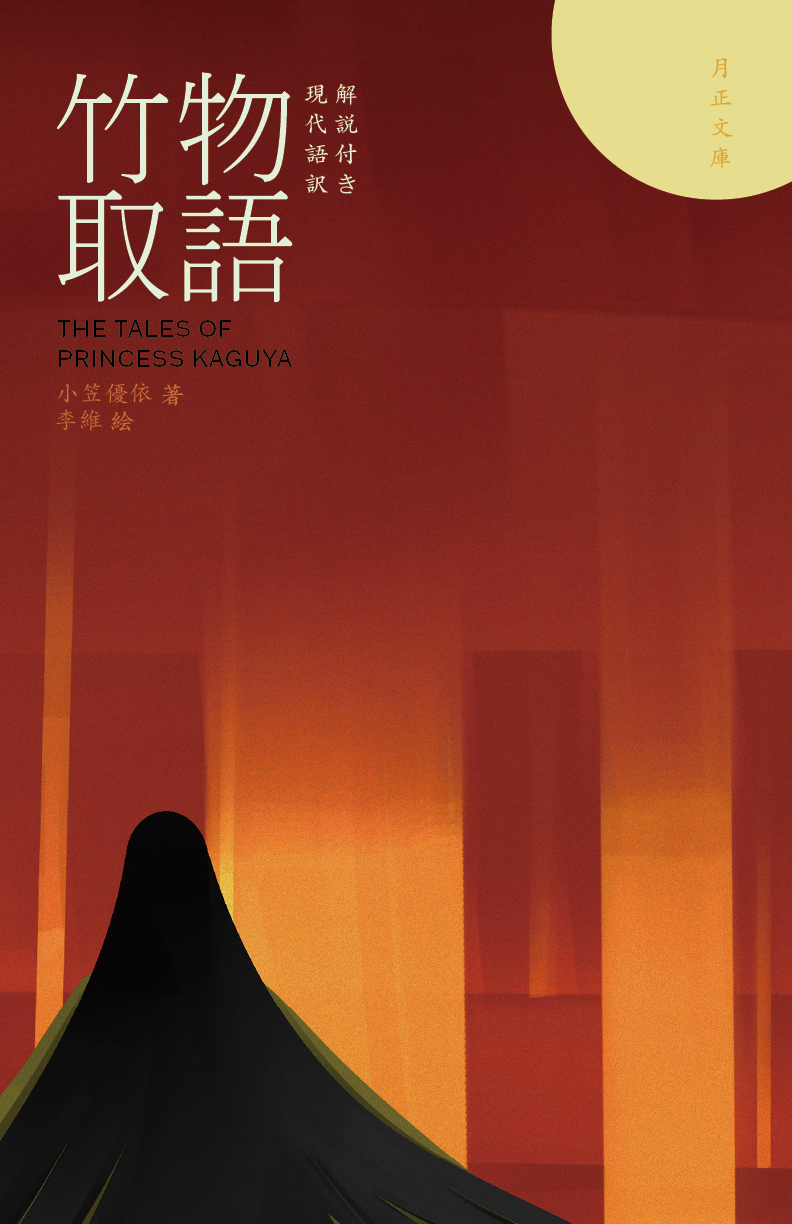
My idea is to publish a modern translation and commentary book of "The Tale of Princess Kaguya." Since the original text of "The Tale of the Bamboo Cutter" is written in classical Japanese, it poses a certain challenge for contemporary readers, especially the younger audience.
By translating it into modern vernacular and providing detailed annotations and cultural context, we can make the core themes of the story more accessible and attract a wider audience to this classic work. This approach would help to promote and recognise the cultural value of "The Tale of Princess Kaguya" in today's society.